Blood flow detector

Ultrasonic Doppler Blood Flow Detector Series

A blood flow detector is a medical device used to detect the flow of blood in the human body.

It can detect blood flow in cardiac vessels (such as the coronary arteries) and peripheral vessels (such as the carotid arteries and femoral arteries).

520e img
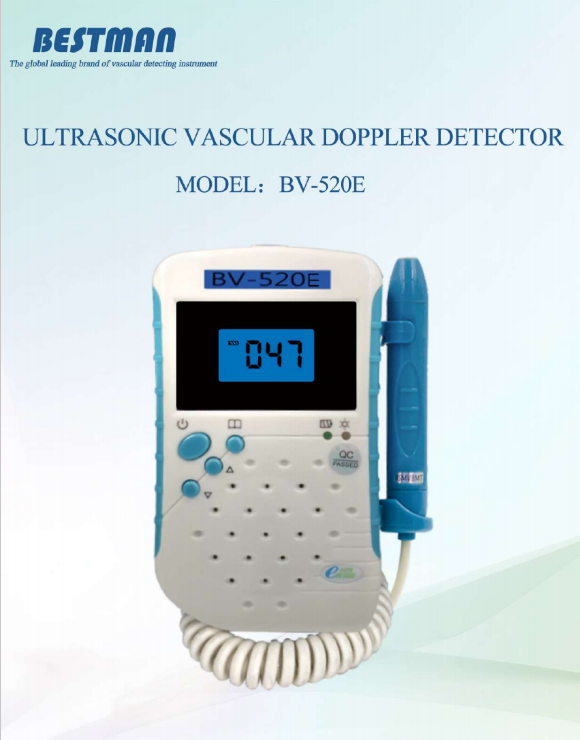
BV-520E

1.Blood flow in human arteries/veins is detected using a pen probe at a frequency of 8.0 MHz (±10%).

2.LCD screen displays the instantaneous average velocity of blood flow in real time.

520t img
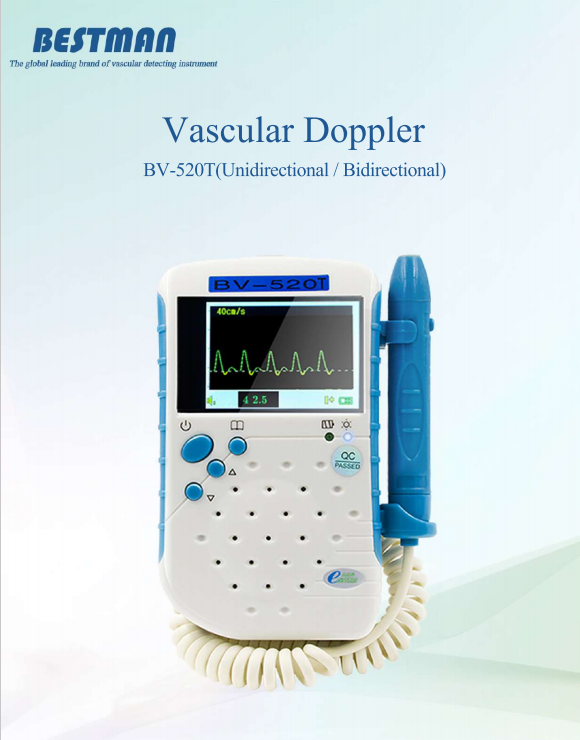
BV-520T

1.Blood flow in human arteries/veins is detected using a pen probe at a frequency of 8.0 MHz (±10%).

2.The 2.4-inch LCD (TFT) display shows the instantaneous average velocity and waveform of blood flow in real time.

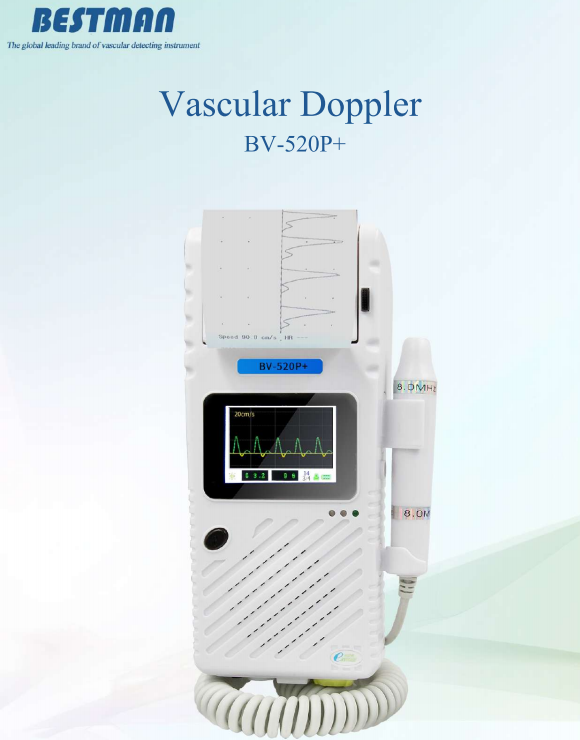
520p img
BV-520P

1.Blood flow in human arteries/veins is detected using a pen probe at a frequency of 8.0 MHz (±10%).

2.The built-in thermal printer can print blood flow waveforms simultaneously, or retrieve saved blood flow waveforms from memory for printing.

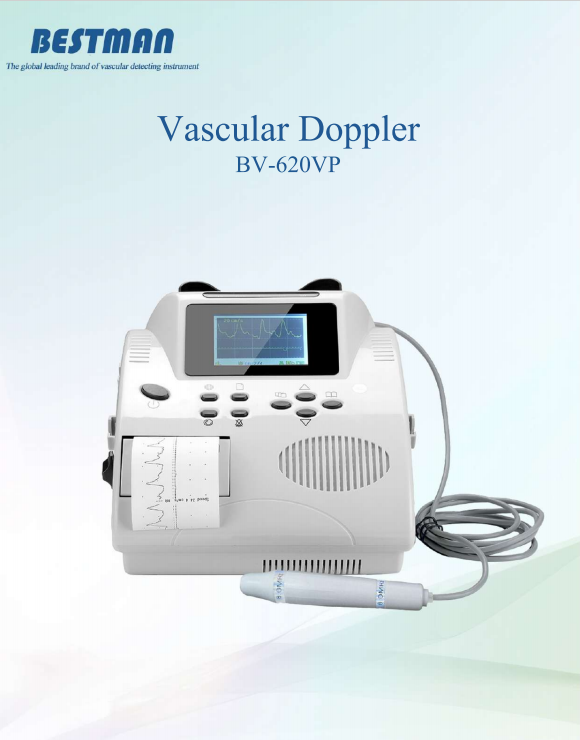
620vp img
BV-620VP

1.Blood flow in human arteries/veins is detected using a pen probe at a frequency of 8.0 MHz (±10%).

2.The 3.2-inch color LCD screen displays the instantaneous average velocity of blood flow, bidirectional blood flow waveform, and pulse rate in real time.

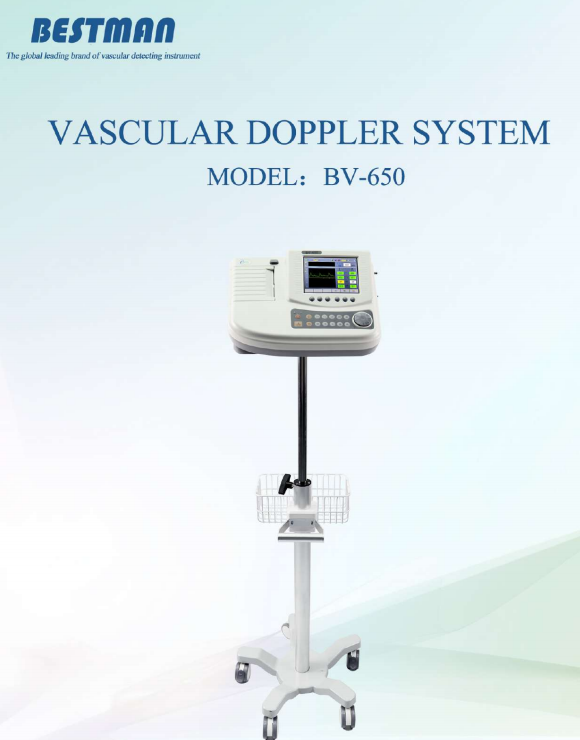
650 img
BV-650

1.Displays blood flow velocity values, pulse rate values, bidirectional blood flow waveforms, PPG waveforms, and PVR waveforms.

2.It can measure ABI/TBI/SEGMENT values, store data, and support playback.

3.It features a built-in USB port, optional PC software, and allows for extensive patient data management and analysis via USB connection to a PC.
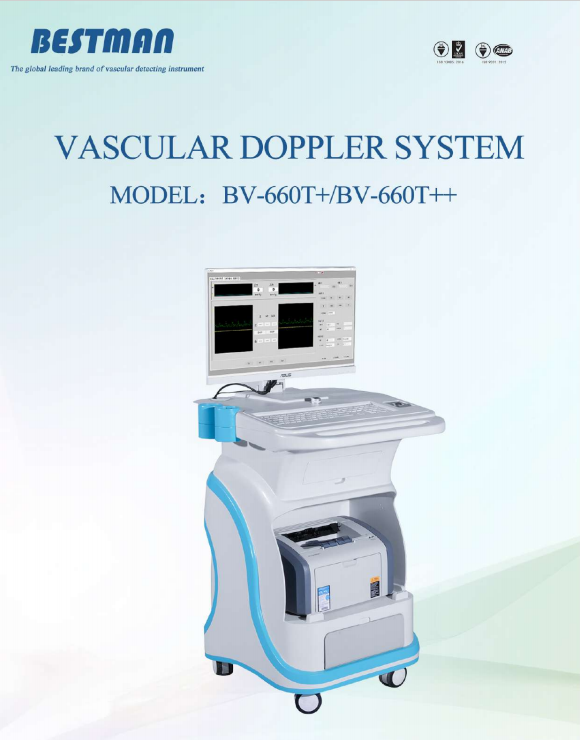
660t+ img
BV-660T+

1.The 8MHz (±10%) frequency pen probe is compatible with bidirectional and unidirectional blood flow probes and PPG probes.

2.It can display blood flow velocity values, pulse rate values, bidirectional blood flow waveforms, PPG waveforms, PVR waveforms, and measure ABI/TBI/SEGMENT values.

3.Configure a laser printer to facilitate the recording and analysis of test data.

Pay attention to your physical health check!

The simplest and most effective way to diagnose peripheral artery disease (PAD) is by performing an ankle-brachial ratio (ABI) test. The ABI is the ratio of systolic blood pressure in the ankle arteries to systolic blood pressure in the upper arm arteries; it is a convenient and non-invasive test. The ABI test can be performed while supine or sitting. Studies of segmental pressure are very helpful in locating lower limb blood flow obstruction in PAD patients.