maternal and infant monitors
Doppler fetal heart rate monitor series
Fetal/Maternal Monitor
Ultrasonic Doppler Fetal Heart Rate Monitor:
A professional perinatal monitor used to monitor fetal heart rate, fetal movement, uterine contractions, and to monitor maternal non-invasive blood pressure, body temperature, respiratory rate, blood oxygen saturation, electrocardiogram and other parameters.
Fetal/Maternal Monitors:
Primarily suitable for perinatal monitoring in hospitals, medical institutions, or at home.
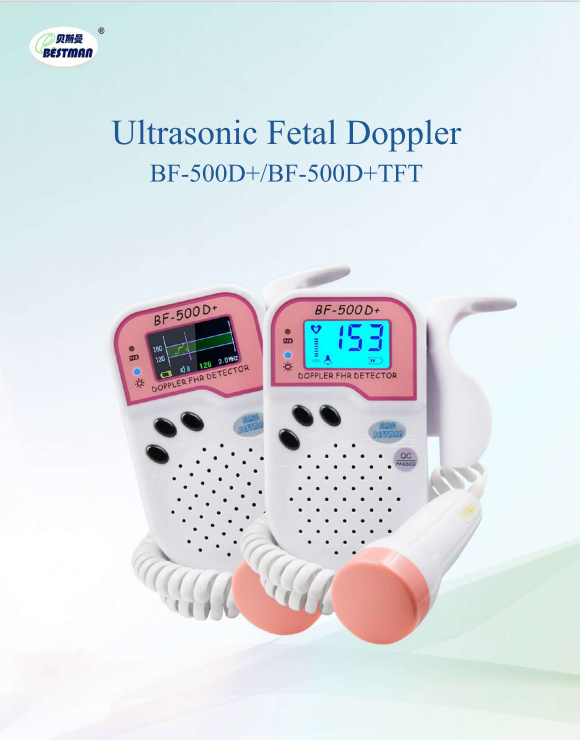
BF-500D+
1.Highly efficient anti-interference design, standard configuration with a 2.0MHz ultrasonic probe, and optional probes of various frequencies.
2.The BF-500D+TFT features a customizable interface with four counting modes and adjustable upper and lower limits for fetal heart rate.
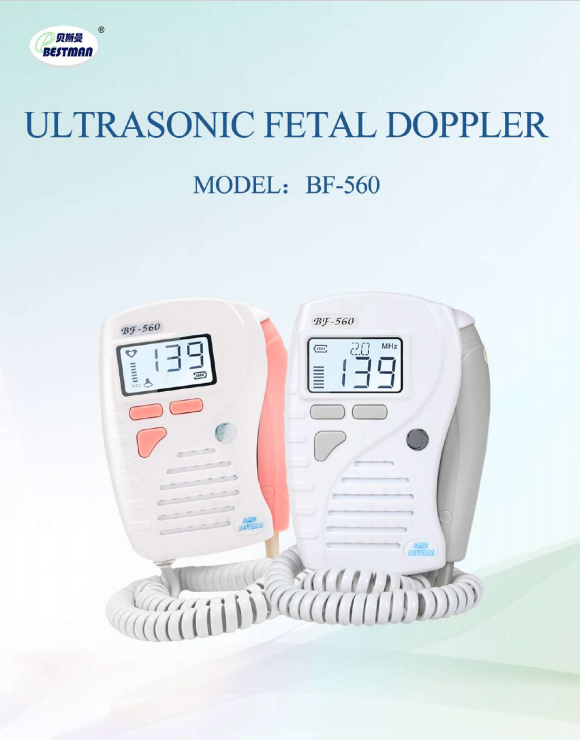
BF-560
1.The LCD displays the fetal heart rate, battery level indicator, signal strength indicator, and probe operating frequency.
2.The standard probe operates at 2.0MHz, with optional 3.0MHz and 5.0MHz probes for detecting umbilical cord blood flow.
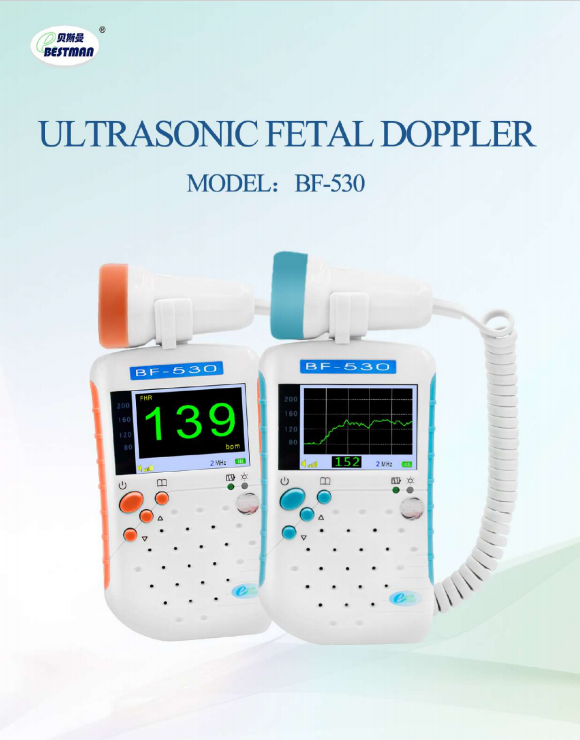
BF-530
1.It uses the same DSP technology as fetal monitors to ensure accurate and reliable fetal heart rate detection.
2.High-sensitivity probe, 2MHz pulse operation mode, with fetal heart rate numerical display and curve display.
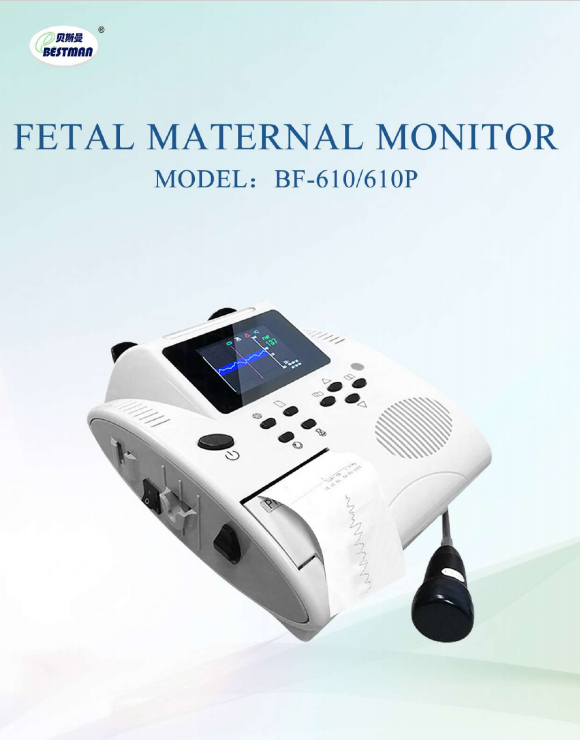
BF-610/610P
1. The 3.2-inch color screen with dual interfaces for fetal heart rate (digital and graphical)
RS-232 port for data transfer to a computer and compatibility with PC software
2. The 2.0MHz ultrasound probe with optional frequency probes
BF-610P built-in thermal printer
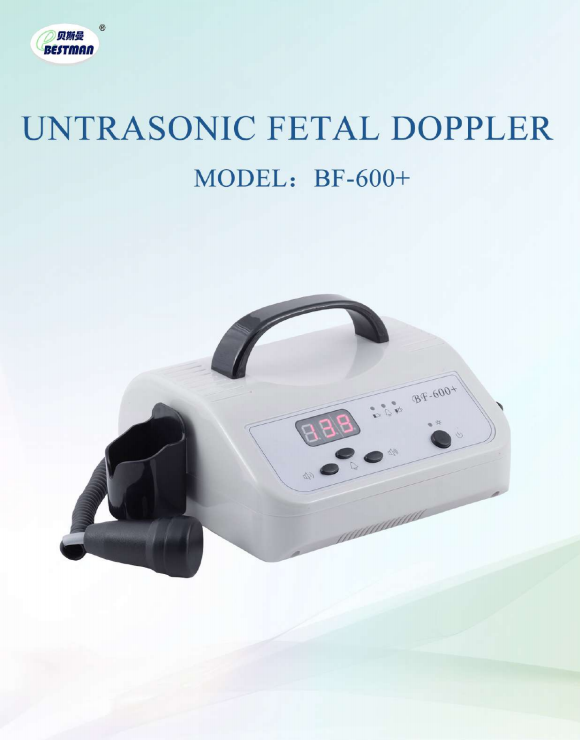
BF-600+
1. Standard configuration includes a 2.0MHz ultrasound probe; a 3.0MHz ultrasound probe is optional.
2. Features include an LED display, a high-capacity rechargeable battery (allowing for up to 8 hours of continuous operation on a full charge), and more.
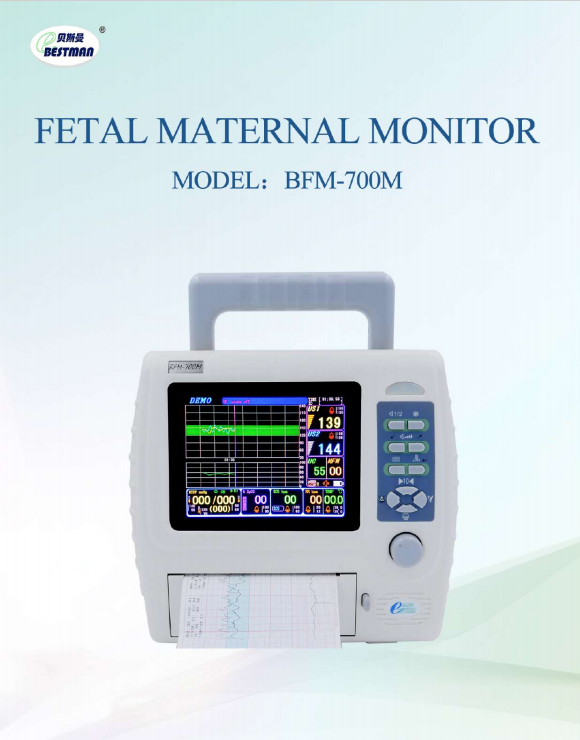
BFM-700M Maternal and Infant Monitor
1. The 5.7-inch LCD screen displays fetal heart rate, uterine contraction pressure and monitoring curves, maternal non-invasive blood pressure, body temperature, respiratory rate, blood oxygen saturation, electrocardiogram, etc.
2. Standard configuration includes a 1MHz ultrasound probe, uterine contraction pressure probe, fetal movement calibrator, pulse oximeter, ECG leads, and body temperature probe.
Ultrasound examination is a physical examination method that closely combines the physical properties of ultrasound waves (such as directionality, reflection, attenuation, resolution, and penetrability) with the acoustic characteristics of human tissue structures. Ultrasound consists of sound waves with very high vibration frequencies, exceeding the upper limit of human hearing. By utilizing its physical properties, it emits and receives echo signals into human organs and tissues, thus aiding in diagnosis and treatment. Sound waves are a physical factor, a form of energy, and there is a safe dosage issue. Whether ultrasound is harmful or harmless to the human body or fetus depends on the ultrasound dosage, also called the threshold safe dose. That is, when the ultrasound dose used is below this value, it is harmless; conversely, when it exceeds this value, it may produce harmful effects or damage. Fetal heart rate monitors also use the ultrasound principle, but their sound intensity is much lower than that of ordinary B-ultrasound equipment. The international ultrasound medical community has an ALARA principle, which is “to obtain the required information with the lowest possible sound output.” Ultrasound diagnosis is irreplaceable in prenatal care and has long been considered a simple, reliable, painless, non-invasive, radiation-free, and safe examination and diagnostic method in the field of obstetrics. For pregnant women after 28 weeks of gestation, the fetus has fully differentiated, and the monitoring time and frequency can be extended.